





Eye For Film >> Movies >> Journacide: The War On Truth (2026) Film Review



“This is not a film about war,” says Seán Murray at the start of his latest documentary. “It’s a film about friendship, love and the indomitable will of the human spirit.”
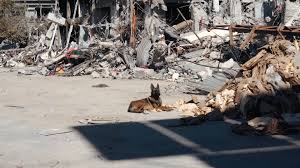
This is a sentiment that anyone closely connected with Lebanon will relate to. It’s also true of Gaza, which likewise suffers under Israeli bombardment; there’s plenty of horror to be found, but the impression that roots itself most deeply in the soul is awe at ordinary people’s ability to survive and retain their values, their kindness and warmth. This is something to which Murray himself relates particularly strongly because of his own childhood in Belfast during the Troubles. It’s something that shaped him and that he finds particularly important in relation to journalists, “the gatekeepers of truth.”
At least 28 journalists have been killed in Lebanon since the conflict began, and a further 15 have been seriously injured, according to human rights organisations operating in the country. That’s too many to be coincidence. Murray’s film is in part a tribute to them, in part an investigation. In a seafront conference centre where assorted members of the press mingle and talk, it’s hard to imagine that anything is wrong. The warm sunshine, the long arc of soft golden sand and the calm blue waters recall postcards from the days when the region was a popular holiday destination – but look across the bay and you will see smoke rising from the green hills where two villages used to be. Phone alerts come in. Israel has just announced that Tyre – magnificent ancient Tyre, inhabited since the Bronze Age – is about to be destroyed. Perhaps the war planes were warming up.
Lebanon is famous for ts cats, semi-feral but in good condition as they’re looked after by a multitude of people. They keep sneaking into shots as we travel from place to place. Wandering around recently ruined buildings, they look confused, mewling, trying to get the attention of people who are no longer there. Murray explains that medics, too are targets here. There’s a reference to the Israeli habit of double-tapping: taking out one lot of people, then waiting until medics come help and striking again. All the old rules of war have been discarded. Adjusting to the new reality is hard. You might let yourself relax, observing the aftermath of a scene, only to experience a visceral shock when a bomb strikes the ground just behind a reporter as he is delivering a piece to camera.
Any suggestion of safety here is illusory. Death can come for anyone, at any time – even those introduced as participants in the film, there to reflect on the fates of others. But with numbers, always, the danger is that we will lose sight of individuals. Having set the stage in the first half, Murray spends the latter part of the film telling personal stories. Popular narratives about brave individuals are expanded to show those they left behind. Families pay tribute. They show us the things that help them to remember, and we see the gaps that murder has left in their lives. Parents remember their bold daughter and thoughtful son, both gone. A girl standing beside the swings where her sisters are playing remembers her lost aunt as the bravest person she ever met. All of the dead were warned, often in brutal terms, and they did their jobs regardless.
Going beyond families and friends and out into the wider community, we see the love that ordinary Lebanese people have for their journalists, understanding what they’re up against. Here, unlike in the West, they are seen very much as purveyors of truth. Why is Western reporting on Israel’s actions so distorted? Murray makes no attempt to answer that question, leaving it to hang in the air. In the process, the conflict seems to shift, to become about something more than nations. Civilisational values are at stake. Watching, one can never forget that in order to defend truth, Murray is putting himself on the line too.
Reviewed on: 20 Jun 2026


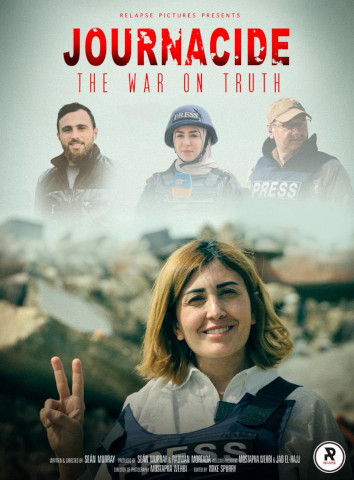
Director: Seán Murray
Starring: Seán Murray, Ali Shoeib, Fatima Ftouni, Mohamed Ftouni
Year: 2026
Runtime: 85 minutes
Country: Ireland
Search database: